Look, I’m gonna be real with you—the first time I walked into Per Se in Manhattan with a sugar daddy, I was absolutely terrified I’d use the wrong fork and expose myself as someone who grew up eating Olive Garden as “fancy dining.”
That was seven years ago. Since then, I’ve sat across from CEOs at Le Bernardin, tech founders at SingleThread in Sonoma, and real estate moguls at Nobu Malibu enough times that the maître d’s recognize me. And here’s what I’ve learned: expensive restaurant etiquette isn’t about memorizing a thousand rules—it’s about confidence, respect, and not being so in your head that you forget to actually enjoy yourself.
Because here’s the thing nobody tells you when you’re starting out in the bowl: these dinners aren’t just about the meal. They’re where he’s watching how you carry yourself, how you treat staff, whether you can hold an interesting conversation while navigating a nine-course tasting menu. And honestly? You’re evaluating him too—his generosity, his manners, whether he’s the kind of man who snaps his fingers at waiters (immediate red flag, by the way).
So let’s talk about how to handle these situations like someone who belongs there—even if you’re still figuring out what “amuse-bouche” means.
Before You Even Get There: The Stuff Nobody Thinks About
The real etiquette actually starts before you arrive. I learned this the hard way after showing up to Mastro’s Ocean Club in a cocktail dress when my SD had specifically mentioned it was a “casual business dinner.” Spoiler: his definition of casual still meant designer everything, just without the sequins.
Confirm the dress code. Seriously. Ask him directly: “What’s the vibe—should I go full evening glam or elegant casual?” Most upscale spots have dress codes listed online, but his expectations matter more. I’ve found that wealthy men appreciate when you put effort into looking polished but appropriate. You want to complement the setting, not compete with it.
And about timing—look, I get it. Traffic exists. Your Uber driver got lost. Your makeup took longer than expected. But chronic lateness is the fastest way to make a man feel like you don’t value his time (or the $500 he dropped on that reservation). If you’re going to be more than five minutes late, text him. If you’re a serial late person, build in an extra 20 minutes to your prep time. It’s that simple.
I remember this one SD—venture capitalist, ridiculously punctual—who once told me, “Victoria, when you’re on time, it tells me you respect the arrangement as much as I do.” That stuck with me. Because in sugar dating, these little gestures communicate so much more than words.
Walking In: First Impressions That Actually Matter
The moment you walk through those doors, you’re being evaluated—by him, yes, but also by the staff. And honestly? How you treat restaurant staff tells a quality man everything he needs to know about your character.

When the host greets you, smile genuinely and make brief eye contact. If your SD hasn’t arrived yet, give his name confidently: “I’m meeting Mr. [Last Name], reservation for two at 7:30.” Not “Um, I think there’s a reservation?” Own it. You belong there.
Once you’re seated, here’s something I wish someone had told me earlier: let him take the lead on physical greetings. Some men prefer a hug, others a kiss on the cheek, some just a warm handshake. Follow his cue, especially on early dates. As psychologist Dr. Helen Fisher notes in her research on attraction, mirroring someone’s physical comfort level builds unconscious rapport—and that matters when you’re establishing connection.
The maître d’ will pull out your chair. Let them. Say thank you. Place your napkin on your lap immediately (folded in half, crease toward you—learned that one at Daniel in NYC after awkwardly shoving mine under my thigh for twenty minutes). Your phone goes on silent and stays in your bag unless you’re taking a photo he’s excited about or there’s a genuine emergency.
The Menu: Where Things Get Interesting
This is where I see so many sugar babies trip themselves up, and it usually comes down to one of two extremes: ordering the cheapest thing to seem “low-maintenance” or going straight for the most expensive item to “maximize” the benefit.
Both are mistakes. Here’s why.
When you order only a side salad at a Michelin-starred restaurant, you’re essentially telling him you’re not comfortable enjoying what he’s offering. It creates this weird tension where he feels like he’s forcing luxury on someone who doesn’t want it. And trust me—generous men want to see you enjoy the generosity. That’s literally part of the appeal.
But ordering the $300 wagyu and the most expensive wine without even pretending to consider anything else? That reads as entitled and transactional. Even in arrangements where financial support is explicitly discussed, the performance of mutual enjoyment matters.
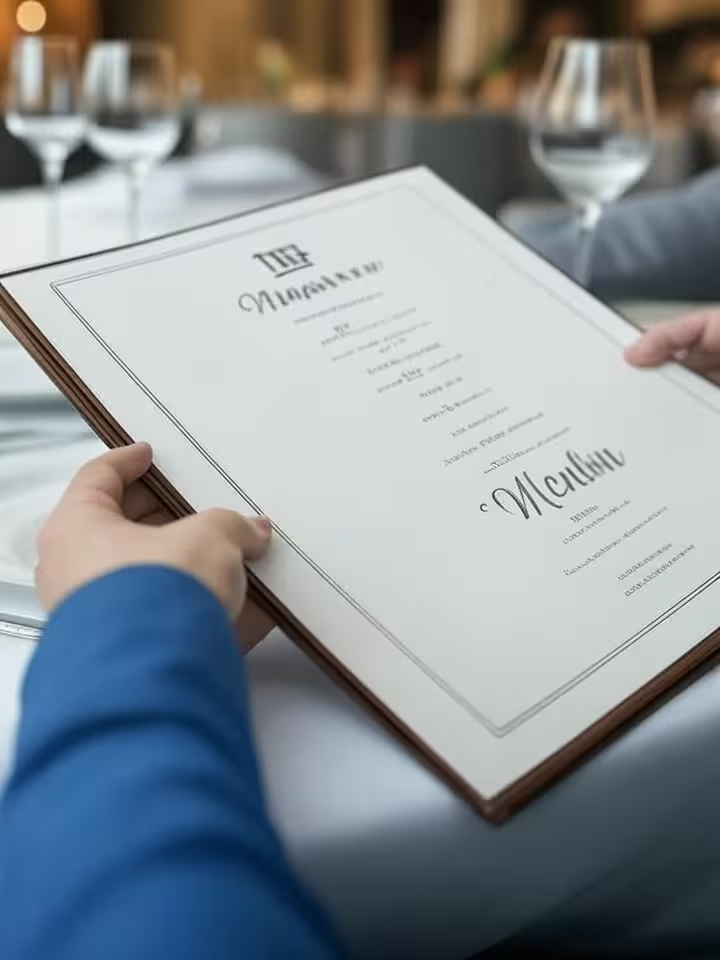
What actually works: Order what genuinely excites you within the context of what he’s ordering. If he gets an appetizer, you get one too. If he’s doing the tasting menu, enthusiastically say yes when he suggests it. If you see something that sounds amazing, point it out: “Oh wow, the diver scallops sound incredible—have you had them here before?”
This creates natural conversation and shows you’re engaged. Plus, asking his opinion subtly acknowledges his experience while giving you information about what might be exceptional.
A quick practical script I’ve used dozens of times: “Everything looks so good—what do you recommend? And please, order for both of us if you know the best dishes. I trust your taste.” This works because it’s both collaborative and deferential without being weirdly submissive. Most experienced SDs love showing off their knowledge of a place they frequent.
And if you have dietary restrictions? Mention them early and casually: “Just so you know, I don’t eat shellfish, but I’m excited to try everything else.” Don’t make it a whole production. High-end restaurants accommodate this stuff constantly.
Wine, Drinks, and Not Accidentally Getting Sloppy
Okay, real talk—I’ve seen arrangements implode because someone couldn’t handle their alcohol at a business dinner. I’ve also been the girl who got a little too relaxed on her second martini and said something I immediately regretted.
The rule I live by now: match his pace, never exceed it, and stop one drink before you think you should.
When he orders wine, express interest but don’t pretend to know more than you do. If he asks what you prefer, it’s totally fine to say, “I tend to like reds, but I’m not great with varietals—would you choose something you think I’d enjoy?” This is honest without being helpless.
If you do know wine, though? Share that knowledge. I once geeked out about a Burgundy with an SD who collected wine, and it completely shifted the dynamic of our arrangement. Suddenly I wasn’t just pretty company—I was someone he could have substantive conversations with.
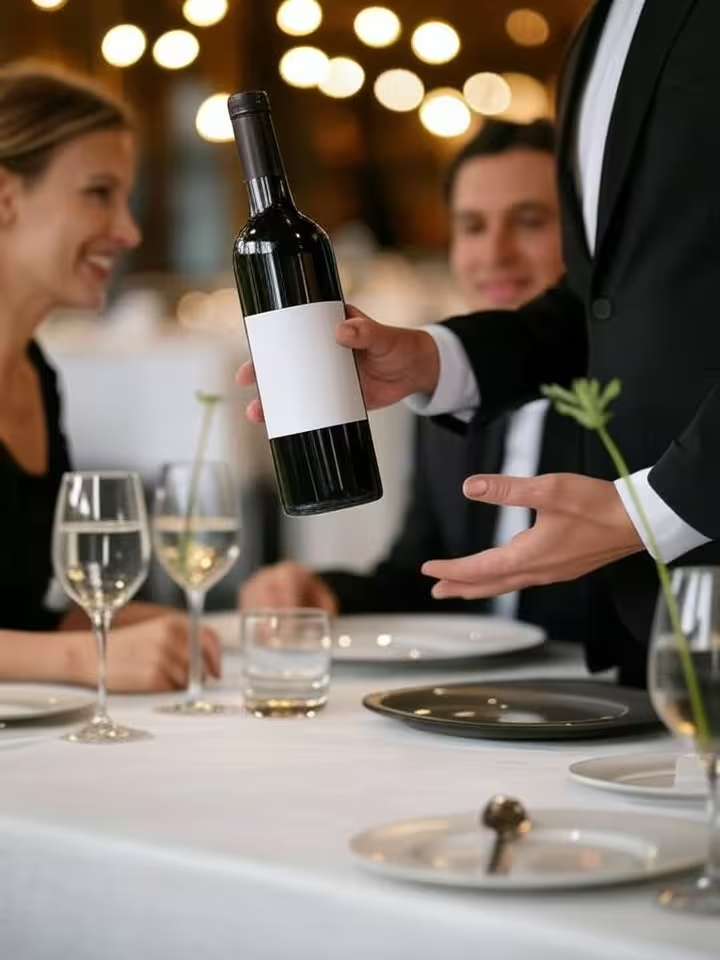
But here’s where so many people misunderstand the alcohol thing in sugar dating: he’s not trying to get you drunk. Quality men want engaging company, not a liability. If you’re slurring by dessert, you’re showing him you can’t handle yourself in the environments he frequents—and that’s a problem if he’s considering bringing you to client dinners or charity galas.
I learned this after a guy I’d been seeing for three months—finance, serious about discretion—gently told me after a dinner at Carbone that I’d been “a little too enthusiastic” with the Negronis. It stung, but he was right. These settings require a level of composure that’s hard to maintain when you’re tipsy.
So pace yourself. Drink water between glasses. Eat the bread they bring (yes, even if you’re watching carbs—this is survival). And if you start feeling it, switch to sparkling water and blame it on wanting to “really taste the food.”
Conversation: The Part That Actually Matters Most
Honestly? You can fumble every fork and still have an amazing date if the conversation is good. But you can have perfect table manners and bomb completely if you can’t hold his attention for two hours.
The biggest mistake I see sugar babies make is treating dinner like an interview where they just answer his questions. That’s not conversation—that’s interrogation. And it’s boring as hell for him.
What works better: Ask him questions that go beyond surface level. Not “What do you do?” but “What made you decide to start your company?” or “What’s the most interesting project you’re working on right now?” Follow-up questions show you’re actually listening, not just waiting for your turn to talk.
Relationship expert Esther Perel talks about how curiosity is one of the most attractive qualities in a partner—and that absolutely applies here. When you’re genuinely curious about his world, it creates the kind of intellectual intimacy that keeps arrangements going long-term.
But also—and this is crucial—bring your own stories to the table. Talk about that art exhibit you saw. The book you’re reading. Your goals for the next year. Wealthy, successful men don’t want a mirror that just reflects their own importance back at them. They want someone interesting.
I remember sitting at Eleven Madison Park with an SD who ran a hedge fund, and we spent an hour discussing a documentary about minimalism I’d mentioned. He later told me that conversation was the moment he knew our arrangement would last—because I challenged his perspective without being combative. That’s the sweet spot.

A few conversation tips I swear by:
Avoid these topics entirely: exes, other arrangements, anything that sounds like you’re fishing for financial commitments, his marriage (if he’s married—let him bring it up), politics unless you’re absolutely sure you align.
Safe but engaging topics: travel plans, favorite restaurants in different cities, what he does to unwind, recent experiences (concerts, shows, trips), your own ambitions in a way that’s aspirational not desperate.
Emergency conversation rescue: If things get awkward, comment on something in your environment. “The presentation of this dish is insane—do you know the chef?” or “I love the art in here. Do you come here often?” It resets the vibe without forcing anything.
And please—put your phone away. I cannot stress this enough. Unless you’re taking a photo he’s excited about or there’s an actual emergency, that thing stays in your bag. Every time you check it, you’re telling him he’s not interesting enough to hold your attention. That’s not the message you want to send to someone who’s investing in you.
Actual Table Manners (The Stuff Your Mom Was Right About)
Okay, let’s get practical for a second because some of this stuff genuinely matters—especially if he’s the type who notices details.
Utensils: Work from the outside in. If there are multiple forks, the tiny one furthest out is probably for appetizers or seafood. When you’re done with a course, place your fork and knife diagonally across your plate (like 4:20 on a clock). If you’re just pausing, rest them on opposite sides of the plate.
Napkin: Lap immediately when you sit. If you get up to use the restroom, place it on your chair, not the table. End of meal, loosely fold it and place it to the left of your plate.
Bread: Break off bite-sized pieces and butter each piece individually. Don’t butter the whole roll and bite into it like a sandwich (I’ve definitely done this before I knew better).
Eating pace: Match his speed roughly. If he’s a slow, savoring eater and you inhale your food, it creates this awkward thing where you’re just watching him eat. Conversely, don’t eat so slowly that your food gets cold while he’s done.
Soup: Spoon away from you, sip from the side of the spoon. Don’t slurp. If you want the last bit, it’s fine to tilt the bowl slightly away from you.
What to do with stuff you can’t eat: Olive pits, fish bones, whatever—discreetly remove them with your fork to the side of your plate. Don’t spit into your napkin. If something is genuinely wrong (hair in food, something tastes off), quietly mention it to your SD, not loudly to the waiter.
Here’s the thing though—nobody’s going to judge you if you use the wrong fork. Seriously. I’ve eaten at some of the best restaurants in the world, and I still sometimes second-guess which spoon is for what. The staff doesn’t care, and if your SD is a decent human, he doesn’t either. What matters more is that you’re comfortable, engaged, and respectful.
If you’re genuinely unsure about something, watch what he does and follow his lead. Or be honest: “I’ve never had [whatever fancy thing], how do you usually eat this?” That’s charming, not embarrassing.
When the Check Comes (And How Not to Make It Weird)
This moment always has this… tension to it, right? Even though in sugar arrangements, it’s understood that he’s paying. But how it happens matters.
Here’s what I do: When the server brings the check, I continue the conversation naturally and don’t reach for my purse. Not in a demanding way, but in a way that acknowledges the dynamic we’ve already established. He will handle it. That’s part of the arrangement.
What you don’t do: ignore it completely like you’re entitled to it. When he puts his card down or hands over cash, make eye contact and say something genuine: “Thank you so much for dinner—this was incredible.” Or if the experience was especially great: “I had such a good time. Thank you for bringing me here.”
This acknowledgment is everything. It’s not transactional—it’s grateful. There’s a massive difference, and quality SDs absolutely feel it.
Regarding tipping—you probably won’t see this since he’s handling the check, but if the topic comes up or if you catch a glimpse, know that 20-25% is standard at upscale places. Some men tip more generously, especially if they’re regulars. A man who’s rude to service staff or tips poorly is showing you exactly who he is—and that’s a red flag you shouldn’t ignore.
After Dinner: The Real Test
The meal’s over. You’ve successfully navigated three courses, two glasses of wine, and a conversation about his latest acquisition. Now what?
This is where expectations need to be crystal clear, and honestly, this is a bigger etiquette issue than which fork you used. If this is a first meeting—a true meet and greet—the expectation should be that dinner ends with a warm goodbye and plans to meet again if there’s mutual interest. Period.
If you’ve moved into an established arrangement with clear terms, then what happens after is whatever you’ve both agreed to. But that agreement should exist before you sit down to eat, not be negotiated over dessert.
I’ve learned to set these boundaries early by being direct during initial conversations: “I love the idea of getting to know you over dinner. For first meetings, I prefer to keep things to the date itself—if we both feel a connection, we can absolutely discuss moving forward.” This has saved me from so many awkward situations where a guy assumed dinner automatically came with “dessert” at his place.
On the flip side, if you’re in an arrangement where intimacy is part of the dynamic, don’t play coy about it. If he suggests moving the evening to a hotel or his place and that’s what you’ve agreed to, respond warmly and confidently. These conversations shouldn’t feel like negotiations every single time—that’s exhausting for both of you.
And regardless of whether the evening continues or ends at the restaurant, text him later that night or the next morning. Something simple: “I had such a great time last night. Thank you again for dinner—hope you got home safely.” This small gesture reinforces that you value his time and investment. It’s the kind of follow-through that separates sugar babies who have endless options from those who are constantly looking for new arrangements.
What to Do When Things Go Wrong (Because They Will)
Not every upscale dinner is perfect. I’ve had servers forget courses, sat through meals where the chemistry just wasn’t there, and once had a guy spend forty-five minutes on a work call while I awkwardly ate bread alone at Spago.
When service is bad or something goes wrong with your food, let him handle it. Don’t flag down the manager yourself or complain loudly. Instead, mention it quietly to him: “Hey, this isn’t cooked how I ordered it—would you mind asking them to fix it?” He’ll take care of it, and how he handles the situation tells you a lot about his character.
If he’s the problem—he’s being rude to staff, checking his phone constantly, or clearly not interested—you have options. You can politely excuse yourself early with a white lie (“I’m so sorry, I’m not feeling well”), or you can finish the meal with grace and simply not see him again. Trust your instincts on first dates—if something feels off, it probably is.
I remember sitting at Cut Beverly Hills with a guy who spent the entire dinner talking about his ex-wife’s inadequacies. Not asking me a single question. By the time dessert came, I knew there wouldn’t be a second date, but I stayed polite, thanked him for dinner, and ghosted afterward. Some situations you just have to get through.
But here’s the thing—even bad dates teach you what you don’t want. That dinner taught me to screen more carefully upfront, to ask questions about relationship history before meeting, and to trust that uncomfortable feeling in my gut. If you approach these experiences as learning opportunities rather than failures, they’re way less frustrating.
The Bigger Picture: Why This All Actually Matters
Look, I know this might seem like a lot of rules for something that should just be… dinner. But here’s what I’ve come to understand after years in this world: sugar dating at the high end is about demonstrating that you can fit into his life seamlessly.
When you handle yourself well at Masa or The French Laundry, you’re showing him that you can be the person on his arm at business dinners, charity events, client meetings. You’re proving that investing in you—whether that’s through allowance, experiences, or mentorship—is worth it because you elevate his life rather than complicate it.
And from his perspective? A generous, quality SD wants to share these experiences with someone who genuinely appreciates them. When you show up engaged, grateful, interesting, and poised, you’re fulfilling your end of the dynamic just as much as he is when he pays the check.
This isn’t about performing perfection—it’s about mutual respect. It’s about both of you bringing your best selves to the table (literally and figuratively) and creating moments that feel genuinely special rather than transactional.
Because at the end of the day, the best arrangements aren’t the ones with the biggest allowances—they’re the ones where both people feel valued. Where dinners at incredible restaurants become traditions you both look forward to, where conversation flows naturally, where the generosity goes both ways even if it looks different from each side.
Final Thoughts: You’ve Got This
The first fancy dinner is always nerve-wracking. Hell, I still get a little flutter before walking into a place I’ve never been, especially if it’s a first date with someone new. But that nervousness? It means you care. And caring about doing things well is actually a huge part of what makes someone successful in this lifestyle.
So take a deep breath. Wear something that makes you feel confident. Show up on time. Be present, be curious, be gracious. Handle the basics with awareness but don’t obsess over every little detail. And most importantly—enjoy yourself. These dinners are supposed to be one of the perks of the arrangement, not an endurance test.
The etiquette stuff? It becomes second nature after a few times. What never gets old is the thrill of sitting somewhere beautiful, eating incredible food, and connecting with someone who values what you bring to his life. That’s the part worth focusing on.
You belong there. Act like it—not arrogantly, but confidently. The rest will fall into place.
Now go order something amazing and actually taste it instead of worrying about whether you’re holding your fork right. Trust me—it’s way more fun that way.