I’ve spent eight years in this lifestyle, and I’ve eaten at places where the waitstaff knows your name before you arrive and restaurants where the silverware alone costs more than my first car. I’ve also watched brilliant, gorgeous women fumble their way through arrangements because nobody taught them the unspoken language of fine dining—and how it plays into the psychology of what wealthy men actually want.

So here’s what I’ve learned, sometimes the hard way, about navigating upscale restaurants without feeling like you’re auditioning for a part you didn’t rehearse for.
Why This Actually Matters (And It’s Not What You Think)
Before we get into the mechanics, let’s talk about what’s really happening at these dinners.
When a sugar daddy takes you to Daniel or Eleven Madison Park, he’s not just feeding you. He’s assessing how you’ll fit into his world. Can you handle his business dinners? Will you embarrass him in front of his colleagues? Do you have the grace to navigate spaces where a single bottle of wine costs four figures?
I know that sounds harsh, but it’s the truth. And here’s the thing—he wants you to succeed. Most quality men aren’t looking to humiliate you. They’re hoping you’ll rise to the occasion because it makes the arrangement more enjoyable for both of you.
Dr. Helen Fisher, biological anthropologist and relationship expert, has studied attraction for decades. In her research on mate selection, she notes that “we’re drawn to partners who can seamlessly integrate into our social environments—it signals adaptability and social intelligence.” In the sugar world, that integration often starts at the dinner table.
But here’s where it gets interesting: what wealthy men find genuinely attractive isn’t perfection—it’s confidence mixed with authenticity. Which means you don’t need to know everything. You just need to know how to learn gracefully.
The Cutlery Situation (Or: How I Stopped Stressing and Learned to Love the Fork)
Okay, so you’re sitting down, and there are seventeen pieces of silverware in front of you. Maybe there’s a tiny fork that looks like it belongs in a dollhouse. Maybe there’s a knife that’s curved weird. And you’re thinking, What fresh hell is this?
Deep breath. Here’s the secret that changed everything for me:
Work from the outside in.
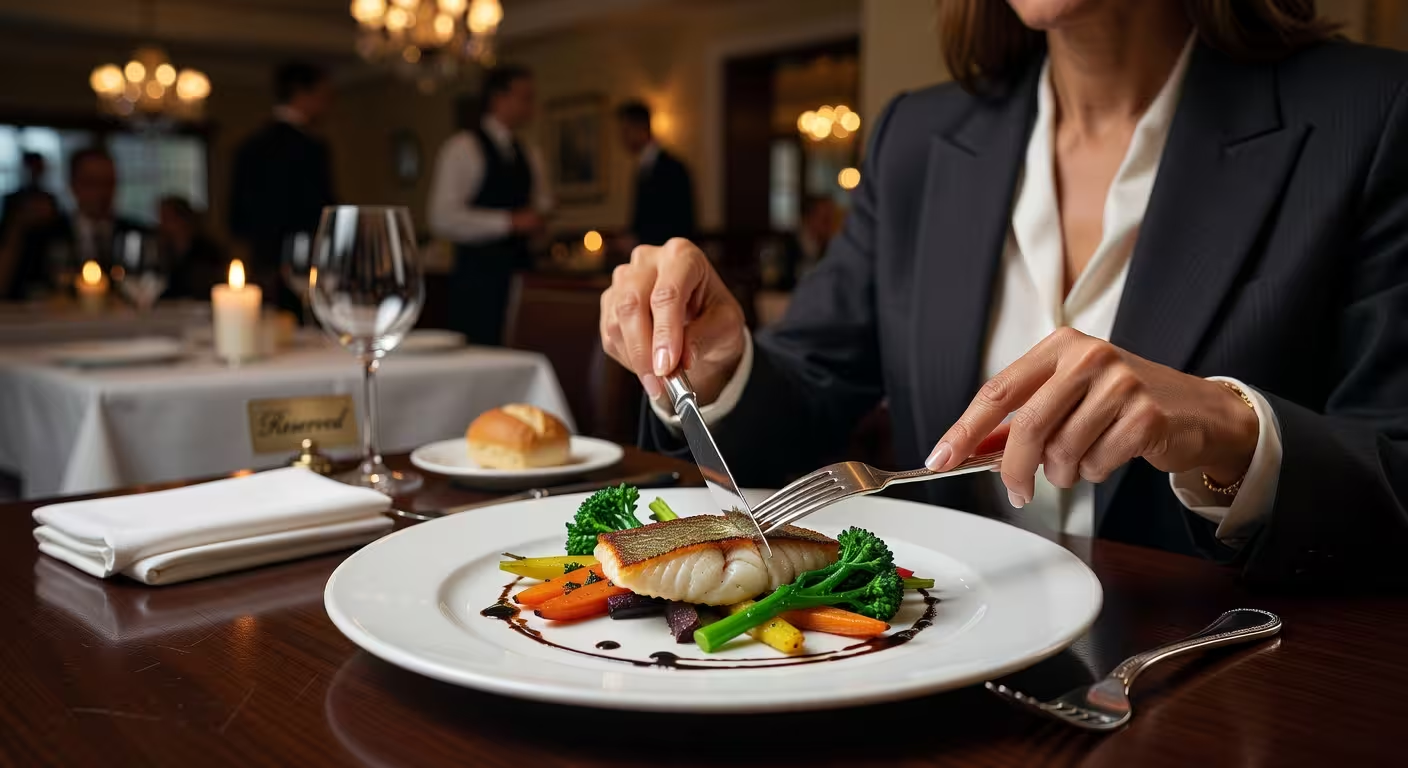
That’s it. That’s the magic rule. The utensils farthest from your plate are for your first course. As each course arrives, move inward toward the plate. The restaurant has literally laid out a roadmap for you.
But let me tell you about the time I screwed this up anyway—because knowing the rule and executing it under pressure are different things.
I was at Alinea in Chicago (if you know, you know) with a tech executive I’d been seeing for about three months. The meal was going beautifully until course six, when I blanked and grabbed the dessert spoon for what turned out to be a savory dish. He didn’t say anything, but I saw his eyes flick to my hand.
Here’s what I did: I caught myself, smiled, and said, “You know what? I got ahead of myself. Still learning all the tricks at places like this.”
And he laughed. Laughed. Then he leaned in and said, “I still Google the menu before I come to restaurants like this. Makes me feel less like an imposter.”
That moment taught me something crucial: vulnerability, when delivered with self-awareness, is more attractive than pretending to be perfect.
The American vs. Continental Divide
Now, there are two main styles of using cutlery, and honestly, this confused the hell out of me for years.
American (Zig-Zag) Style:
- Hold fork in left hand, knife in right
- Cut your food
- Put down the knife
- Switch fork to right hand
- Eat
- Repeat this dance
Continental (European) Style:
- Fork stays in left hand, tines down
- Knife stays in right hand
- Cut and eat without switching
- Way more efficient, honestly
I started using Continental style after dating a man who’d spent years working in London, and I’ll be honest—it feels more natural once you get the hang of it. Plus, it looks more polished. But here’s the thing: either style is correct in American fine dining. Just pick one and commit. The worst thing you can do is switch back and forth randomly because you’re nervous.
One practical tip that actually helped me: practice at home with a nice dinner, even if it’s just a good steak you cooked yourself. Set the table properly, use real silverware, and just… do it. Getting comfortable in expensive restaurants starts way before you walk through the door.
The Secret Language of Silverware Placement
This is where things get subtle—and where you can actually communicate with the waitstaff without saying a word.
If you’re just taking a break: Place your knife and fork on your plate in an inverted V shape (like a little tent). This signals “I’m still working on this, don’t take it away.”
If you’re finished: Place your knife and fork parallel on the plate, handles at 4 o’clock position, knife blade facing inward. This is the universal signal for “I’m done, you can clear this.”
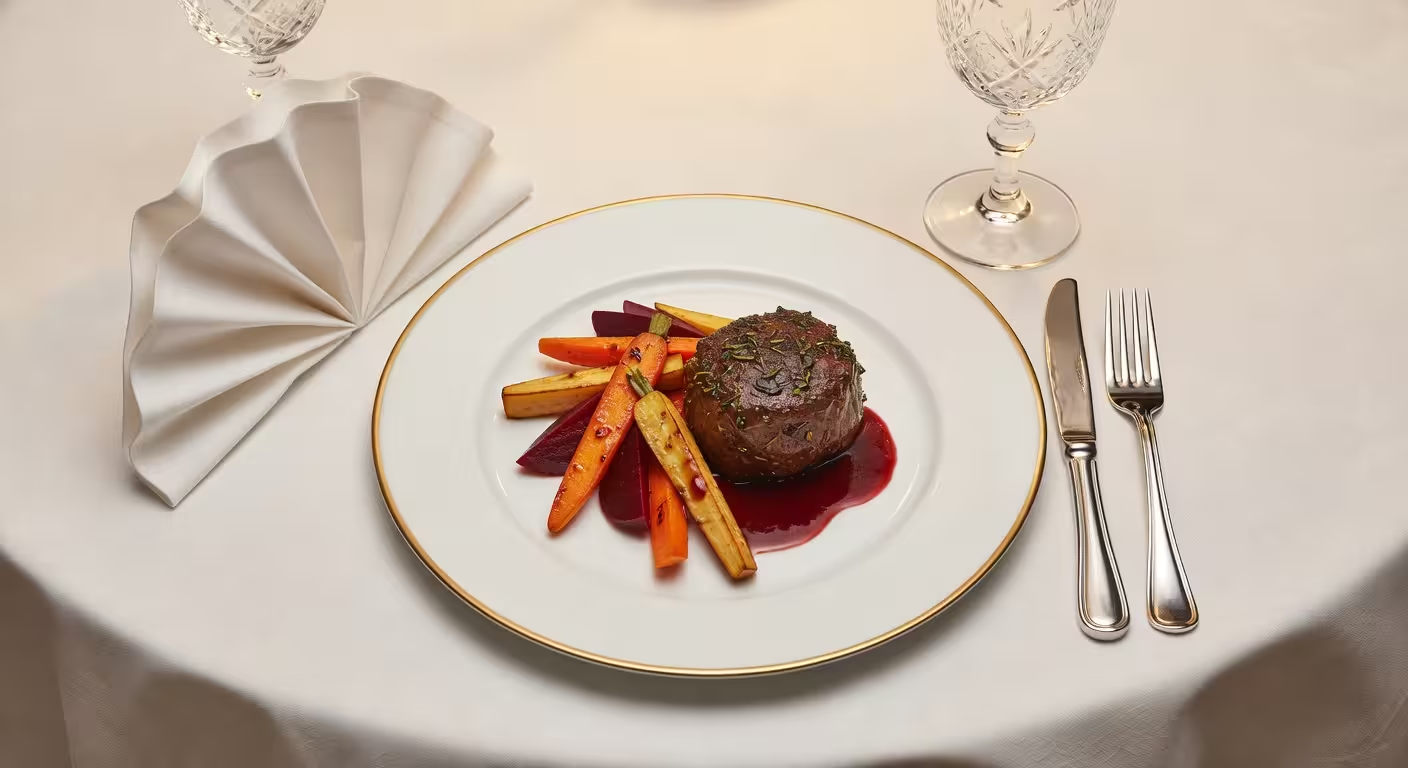
I learned this the hard way at Masa in NYC when a server kept trying to take my plate while I was still eating because I’d set my utensils down wrong. After the third time gently pulling my plate back, my date quietly showed me the right way. It was a small moment, but it made such a difference.
Napkin Choreography (Yes, There Are Rules)
Let me tell you something embarrassing: I used to tuck my napkin into my shirt like a bib when I was younger. I know. Thankfully, this was before the sugar bowl, but still. We all start somewhere.
Here’s what you actually do:
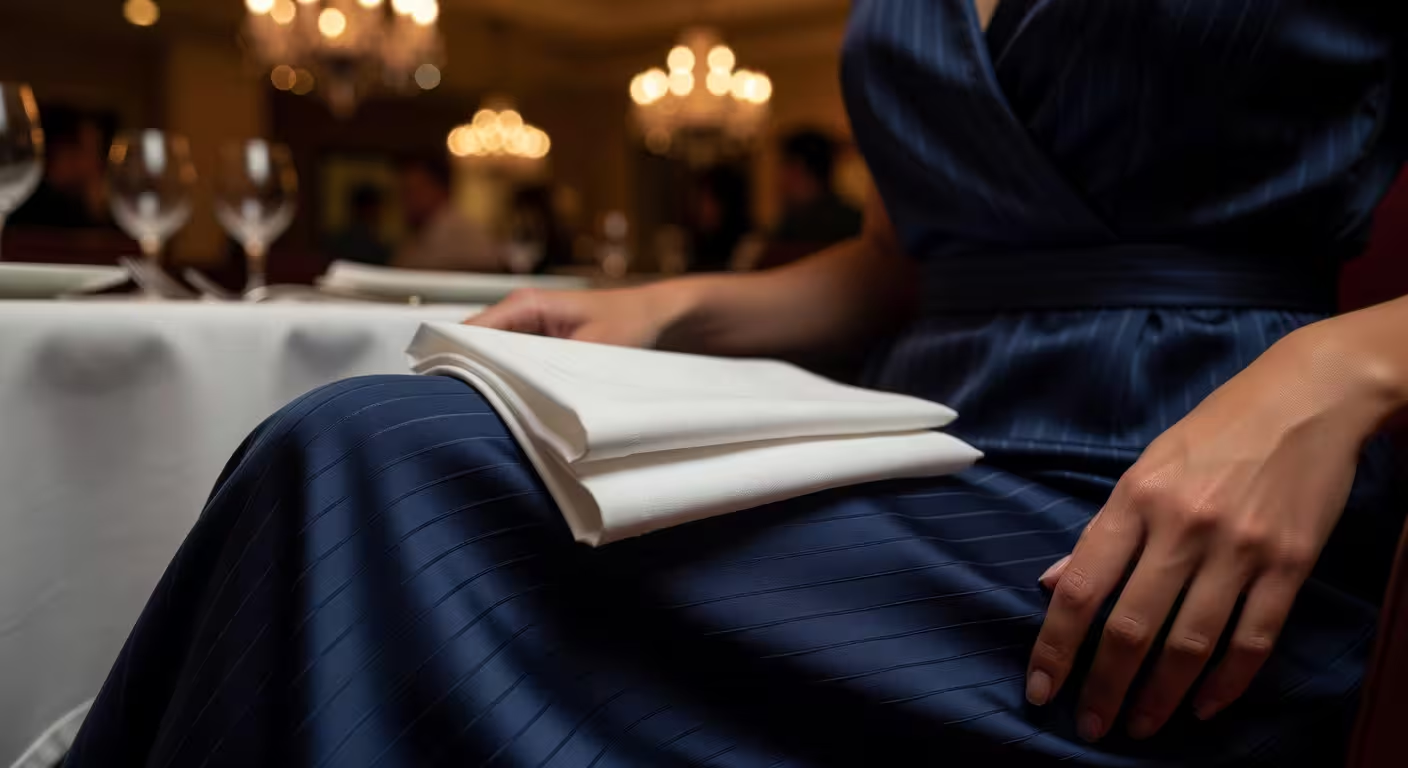
When you sit down: Wait until your host (in this case, your SD) places his napkin in his lap. Then unfold yours—only halfway if it’s a large dinner napkin—and place it across your lap with the fold toward your body. The napkin should never go anywhere near your neck unless you’re at a lobster shack, and even then, debatable.
During the meal: Use your napkin to gently blot (not wipe) the corners of your mouth. Bring the napkin up to your mouth, don’t lean down to it. And here’s a pro tip that saved me countless times: always blot before you take a sip of your drink. Nobody wants to see your lipstick on the wine glass, and more importantly, you don’t want to taste your dinner on your wine.
If you need to excuse yourself: This is where women mess up constantly. When you leave the table temporarily—bathroom, phone call, whatever—place your napkin loosely on your chair, not on the table. This signals to the waitstaff that you’re coming back. It’s a small thing, but it matters.
I remember having dinner at The French Laundry in Napa Valley, and I excused myself between courses. When I came back, I noticed the server had refolded my napkin and placed it back on my chair, perfectly arranged. That’s the level of attention to detail at these places. They notice everything.
At the end of the meal: When you’re completely finished, place your napkin loosely to the left of your plate. Don’t refold it to look unused (that’s actually considered improper—it suggests you didn’t use it), but don’t crumple it into a ball either. Just gather it loosely and set it down.
The Thing Nobody Tells You About Napkins
Here’s something I learned from a maitre d’ I dated briefly (yes, that happened): the napkin is also a social cue.
When your sugar daddy places his napkin on the table, that’s the signal that the meal is ending. It’s the fine dining equivalent of “check, please.” So if you’re enjoying yourself and want to prolong the evening, keep your napkin in your lap and keep the conversation going. But if you’re ready to move on—maybe to drinks at his place, maybe to end the evening—you can subtly signal that by placing yours on the table too.
This kind of non-verbal communication is huge in maintaining mystery and intrigue in sugar relationships. You’re not spelling everything out. You’re letting things unfold naturally, with grace.
Table Manners That Actually Matter (And Some That Don’t)
Okay, so you’ve got your cutlery down, your napkin’s in the right place, and you’re feeling pretty good. But then the bread basket arrives, and you’re like, Wait, do I butter the whole slice or…?
Let’s talk about the table manner stuff that genuinely makes a difference versus the stuff that’s just pretentious nonsense.
DO These Things:
Keep your phone completely out of sight. Not face-down on the table. Not next to your wine glass. In your purse. I don’t care if you’re expecting a call from the President—it can wait. The fastest way to signal that you’re not worth his investment is to keep checking your phone. I’ve seen men lose interest mid-dinner because of this.
Sit up straight, but not rigid. Good posture makes you look confident and engaged. Slouching makes you look bored or uncomfortable. But don’t sit there like you’ve got a steel rod for a spine. You’re having dinner, not auditioning for the Royal Ballet.
Pace yourself to match his eating speed. This is subtle but important. If he’s a slow, leisurely eater and you’re wolfing down your food like you haven’t eaten in three days, it creates an awkward dynamic. Conversely, if he’s moving through courses quickly (some high-powered guys eat efficiently even at nice restaurants) and you’re still picking at your appetizer, it throws off the rhythm. Pay attention and adjust.
Wait for everyone to be served before you start eating. This is basic, but I still see women jump the gun. Unless your date explicitly says “please, start,” wait until everyone at the table has their food. It shows consideration.
Break bread, don’t cut it. When the bread basket comes around, tear off a piece with your hands—about bite-sized. Then butter just that piece over your bread plate. Don’t butter the whole slice at once like you’re making a sandwich. I don’t know why this rule exists, but it does, and violating it makes you look unsophisticated.
Taste before you season. Never reach for the salt and pepper before you’ve tried the dish. Chefs at high-end restaurants have carefully balanced the flavors. Seasoning before tasting suggests you don’t trust their expertise. If your date notices this (and many men who frequent these places will), it can come across as unsophisticated.
DON’T Do These Things:
Don’t push your plate away when you’re finished. Just leave it where it is. Pushing it forward like you’re done with a diner meal looks sloppy.
Don’t blow on your food to cool it down. If something’s too hot, just wait. Or take smaller bites. But don’t blow on it like it’s a child’s soup. Same goes for stirring food aggressively to cool it down.
Don’t gesture wildly with your cutlery. I’m Italian-American, so I naturally talk with my hands. But waving your fork around while you’re telling a story is both dangerous and tacky. Put your utensils down when you’re talking. Pick them up when you’re eating.
Don’t reach across the table. If you need the salt, the bread, whatever—ask someone to pass it. Don’t stretch over plates and glasses like you’re doing yoga.
Don’t make a big deal about dietary restrictions at the table. If you have allergies or serious restrictions, address this with the server quietly when you first sit down, or ideally, when the reservation is made. Don’t spend fifteen minutes at the table interrogating the server about every ingredient. It disrupts the flow and can make your date uncomfortable.
The Alcohol Question
This deserves its own section because I’ve seen more arrangements stumble over alcohol than almost anything else.
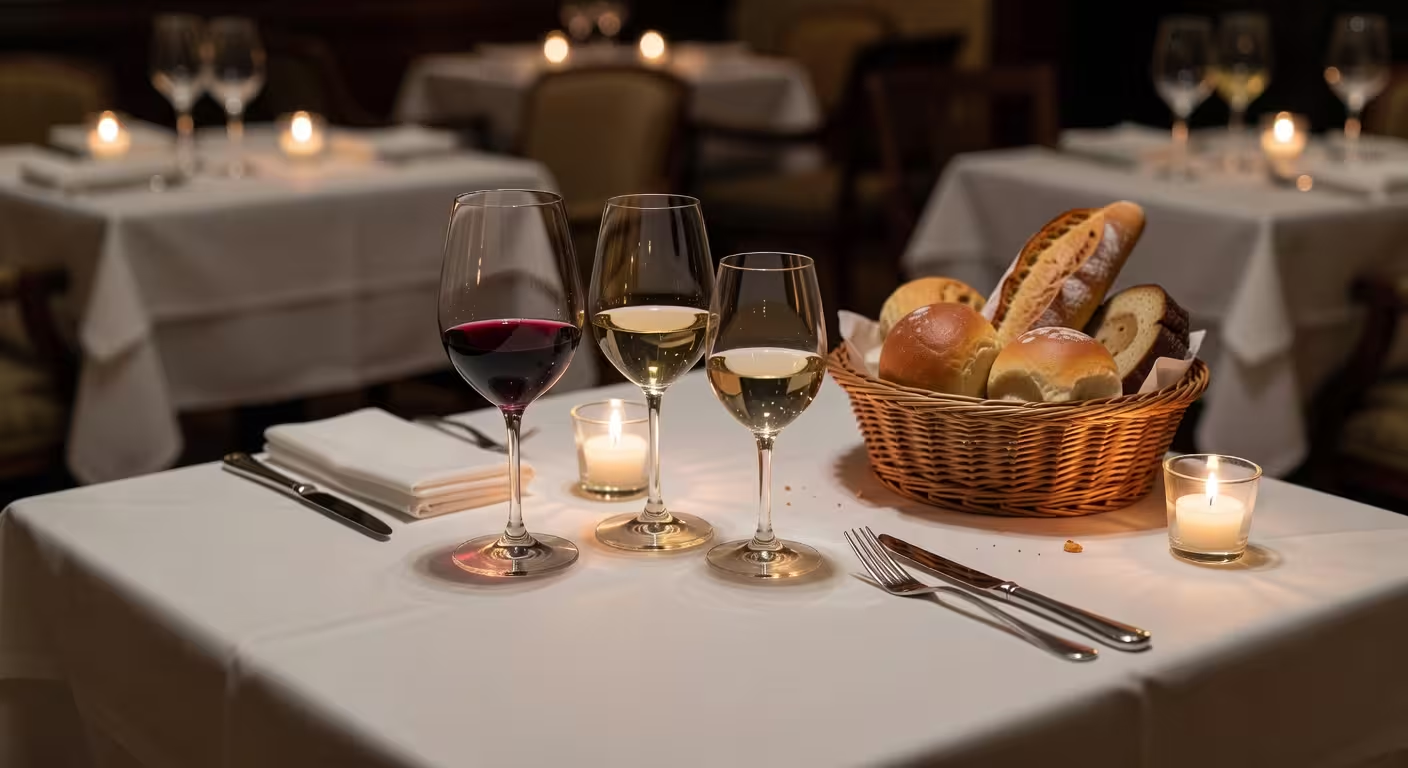
If he orders wine and you don’t drink: Just say so. “I don’t drink, but please, go ahead.” Simple. Don’t make it a thing. Don’t launch into an explanation about why unless he asks. Most men will respect it and might even appreciate that you’re clear about your boundaries.
If you do drink: For the love of God, pace yourself. Fine wine at nice restaurants is strong, and it can sneak up on you—especially if you’re nervous and not eating much. I have a personal rule: never more than two glasses at a first or second dinner. After that, you can adjust based on the dynamic, but early on, staying sharp is more important than seeming fun.
I learned this lesson at Carbone in NYC. Third date with a finance guy, incredible chemistry, and I had one too many glasses of this amazing Barolo. Not drunk, but definitely loose. I said something about his ex-wife that I’d meant to keep to myself, and the whole vibe shifted. We never met again after that night.
Psychologist and relationship expert Esther Perel talks about the importance of “erotic mystery” in relationships—maintaining some distance, some unknowability. Getting tipsy and oversharing kills that mystery fast. In setting boundaries with sugar daddies, knowing your alcohol limit is a boundary worth having.
Conversation Etiquette (The Part That Actually Matters Most)
Here’s something that took me years to figure out: the food is not the point.
The table manners, the silverware, the napkin choreography—all of it is just infrastructure for what really matters, which is connection. And connection happens through conversation.
So while you’re worrying about which fork to use, don’t forget to actually be present with the person across from you.
Ask questions that go beyond surface level. Not “What do you do?” (he’s probably tired of that question), but “What’s the most interesting project you’re working on right now?” or “What got you interested in [his industry] in the first place?”
Listen more than you talk. This is hard for me—I love talking. But I’ve noticed that the dinners that lead to the strongest arrangements are the ones where I spend 60-70% of the time listening and asking follow-up questions. Men, especially successful men, are used to being the one asking questions. When you flip that dynamic, it’s refreshing for them.
Share, but don’t overshare. Tell stories that reveal who you are, but maintain some mystery. I’ll talk about my background, my interests, my ambitions—but I won’t trauma-dump about my childhood or my last relationship. Save the deeper stuff for when you’ve built more trust.
Read the energy. Some men want light, fun conversation over dinner. Others want to go deep on business, politics, philosophy. Pay attention to what he’s responding to and adjust. This isn’t about being fake—it’s about being adaptable, which is a skill that’ll serve you in every area of life.
What to Do When You Inevitably Mess Up
Because you will. I still do, and I’ve been doing this for eight years.
Last year, I was at Nobu Malibu with a potential SD, and I knocked over my water glass. Not a gentle tip—a full-on waterfall across the table that soaked the bread basket and came dangerously close to his phone.
I froze for half a second, then immediately signaled the server, said “I’m so sorry, completely my fault,” and helped blot the water with my napkin while the staff rushed over. My date actually seemed impressed by how I handled it. He later told me that he’d seen women completely fall apart over smaller mishaps, and my calm response showed him I could handle pressure.
If you use the wrong fork: Just keep going. Don’t announce it. Don’t apologize. The only people who’ll notice are the ones who don’t matter.
If you spill something: Apologize once, briefly. Let the staff clean it up. Don’t make it a ten-minute ordeal.
If you don’t know what something is on the menu: Ask. “I’ve never had [dish], what’s it like?” This shows curiosity, not ignorance. Most men enjoy playing the role of guide, especially if you frame it as interest rather than confusion.
If the meal is truly outside your comfort zone: It’s okay to be honest. Early in my time in the bowl, a man took me to a very avant-garde restaurant where they served things like “deconstructed oyster foam” and “beef essence.” I tried everything, but at one point, I just smiled and said, “This is so interesting, but I have to admit, I’m more of a classic flavors person.” He laughed and said he was too, and we ended up at a steakhouse for our next dinner. That honesty actually brought us closer.
The Bigger Picture: What This Is Really About
Look, if you’re reading this and feeling overwhelmed, I get it. When I started in the sugar bowl, I thought I needed to transform into some polished, perfect version of myself to be worthy of these men and these experiences.
But here’s what I learned: the best arrangements happen when you’re confident enough to learn and authentic enough to still be yourself.
Fine dining etiquette isn’t about pretending to be someone you’re not. It’s about acquiring skills that help you move comfortably in spaces that might have once felt intimidating. It’s about showing respect—for yourself, for your date, for the people serving you.
And yeah, it’s about understanding what a sugar baby role actually entails—which includes being someone who can seamlessly fit into a high-powered man’s lifestyle without constant hand-holding.
But it’s also about recognizing that you have inherent value beyond your table manners. The right sugar daddy will appreciate your effort to learn, but he’ll also appreciate your intelligence, your humor, your ambition, and yes, your occasional humanness when you mess up.
Relationship researcher Dr. John Gottman found in his decades of studying couples that successful long-term relationships (and yes, sugar arrangements can be long-term) are built on a foundation of what he calls “turning toward” each other—small moments of attention and care. In the context of fine dining, this means being present, engaged, and genuinely interested in the shared experience.
So practice the technical stuff. Learn which fork goes where. Master the napkin choreography. But don’t lose yourself in the process. The goal isn’t perfection—it’s confidence mixed with authenticity.
That’s what actually attracts quality men. That’s what turns a nice dinner into the beginning of a genuine arrangement. And that’s what’ll make you feel like you belong in these spaces—not because you’ve memorized all the rules, but because you’ve internalized the understanding that you have every right to be there.
Now go book that reservation, put on something that makes you feel incredible, and remember: the most important thing you’ll bring to the table isn’t knowing which spoon is which. It’s you.
And if you still grab the wrong fork? Honestly, nobody who matters will care.