Look, I’m gonna be real with you—I’ve been asked this question about a hundred times: “Victoria, how do I know if this guy is actually real?” And honestly? It’s the right question to ask. Because in this world, there are genuine, generous men looking for authentic connections… and then there are time-wasters, pic collectors, and straight-up scammers who’ll waste weeks of your time.
I learned this the hard way my second year in the bowl. Met a guy on Seeking who claimed to be a tech investor in San Francisco. His profile looked legit—nice photos, articulate messages, talked about his portfolio companies. We texted for two weeks. Then when I suggested meeting at Flour + Water in the Mission, he suddenly had “emergency travel to Singapore.” Then London. Then Tokyo. You see where this is going.
After that, I developed a system. And it’s not about being paranoid or treating every potential SD like a criminal—it’s about protecting your time, energy, and safety while staying open to real opportunities. Over eight years and three major cities later, these verification tricks have saved me countless wasted evenings and helped me build genuine arrangements with quality men.
Why verification matters more than you think
Here’s what nobody tells you when you’re starting out: the biggest cost in sugar dating isn’t getting scammed out of money—it’s getting scammed out of time.
I’ve watched friends spend months chatting with guys who were never going to meet. Others flew to different cities for “potentials” who turned out to be married men looking for free escort services. One girl I mentored nearly lost her apartment deposit because she turned down other arrangements while waiting for a “generous SD” who kept promising to send her allowance “next week.”
Psychologist Dr. Robert Cialdini talks about the principle of commitment and consistency in his research—once we’ve invested time in something, we’re psychologically wired to keep investing, even when red flags appear. That’s why scammers drag things out. They’re counting on you getting so emotionally invested that you ignore obvious warning signs.
So verification isn’t about being suspicious—it’s about being smart with your most valuable resource.
The reverse image search: Your first line of defense
Okay, this is basic but I’m including it because I still meet sugar babies who don’t do this. Before you respond to any message, right-click his profile photos and run them through Google Images or TinEye.
What you’re looking for:
Stock photos. If his “candid beach shot” shows up on a modeling site or appears in fifteen other dating profiles, that’s your answer right there. Block and move on.
Stolen identity. Sometimes you’ll find the real person—a CEO whose photos got lifted from his company’s website, or someone’s husband whose wife is probably gonna want to know about this.
Inconsistent names. His profile says “Michael” but the image search shows “David Rodriguez, Austin realtor.” Yeah, that’s not great.
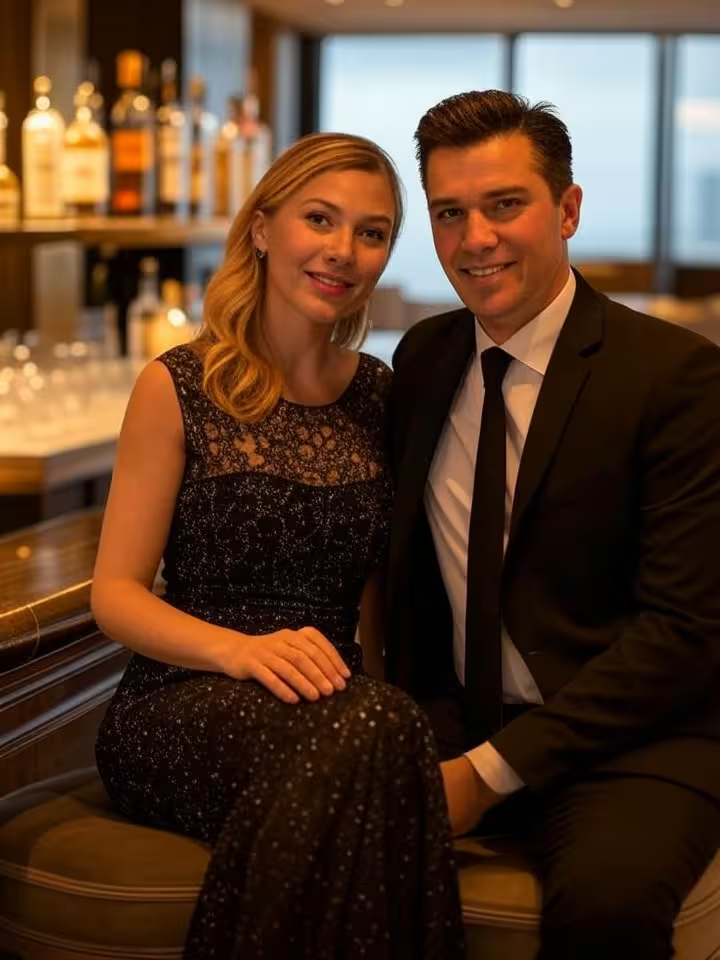
I caught a fake this way in Miami. Guy claimed to be a hedge fund manager, but his photos led me to a fitness Instagram in Brazil. When I called him out (nicely—always stay classy), he unmatched immediately. Saved myself weeks of bullshit messages.
But here’s the thing—spotting fakes gets trickier when guys use their own photos but lie about everything else. That’s where deeper verification comes in.
The LinkedIn cross-reference (works like magic)
If he mentions his profession, company, or industry, find him on LinkedIn. I know this feels like stalking, but trust me—real SDs with actual careers don’t hide their professional presence.
What to verify:
Does his career match his claimed lifestyle? If he says he’s a “senior executive” but LinkedIn shows he’s been an entry-level analyst for six months, those numbers aren’t gonna work for an arrangement.
Career progression. Genuine successful men have legible career paths. You can see how they got where they are. Scammers often claim vague titles like “international businessman” or “entrepreneur” with zero verifiable history.
Connections and endorsements. Real professionals have networks. If his LinkedIn has three connections and no activity, something’s off.
I once verified a potential SD who said he was a partner at a law firm in Chicago. Found him on LinkedIn—200+ connections, articles he’d written, speaking engagements. Everything checked out. Our arrangement lasted almost two years and he was exactly who he claimed to be.
Anthropologist Dr. Helen Fisher has studied how digital identity verification affects trust in modern relationships. Her research shows that when people know they’re verifiable, they behave more honestly from the start. So guys who are transparent about their identity? Generally safer bets.
The video call test (non-negotiable for me now)
After a few messages, if there’s mutual interest, I suggest a quick video call. Just ten minutes. And honestly? The way he responds to this request tells you everything.
Real SDs say: “Sure, I’m free Tuesday evening” or “I’m slammed this week but how about Saturday morning?”
Fake SDs say: “My camera’s broken,” “I’m too busy,” “Can’t we just text?” or my personal favorite—”I don’t do video calls until we’ve built more trust.” (Translation: “I’m not who I say I am.”)

During the video call, pay attention to:
His surroundings. Does his environment match his claimed lifestyle? I had a call once with a guy who said he lived in a penthouse in Manhattan. His video showed a cramped studio with Ikea furniture and roommate noise in the background. Next.
His comfort level. Genuine guys are usually relaxed and conversational. Scammers often seem nervous, keep the camera angled weird, or the call is suspiciously dark.
Conversation flow. Can he hold an intelligent conversation? Does his personality match his messages? You’d be surprised how many guys are smooth over text but can’t string two sentences together in person.
I remember a video call with a San Francisco tech founder—we talked about his company’s Series B funding, his favorite restaurants in North Beach, his recent trip to Japan. It was clear within five minutes he was legitimate, successful, and genuinely interesting. We met the following week at Quince and started an arrangement that was honestly one of my favorites.
The video call also protects you from catfishing in reverse—you want him to see the real you too, so there are no surprises at the M&G.
The public meeting: Where the rubber meets the road
Okay, so he’s passed the image search, the LinkedIn check, and the video call. Now comes the actual first meeting—what we call the meet and greet.
Always, always, ALWAYS meet in public first. I don’t care if he offers to fly you to Paris for a first date. Meet in a public place in your city (or his, if you’re comfortable traveling after thorough verification).
My go-to spots for M&Gs:
Upscale hotel bars (The Peninsula in Chicago, The Carlyle in NYC, Chateau Marmont bar in LA)—classy, public, safe
High-end restaurants for coffee or lunch (not dinner on the first meet—keep it short)
Museum cafes or cultural spots where there’s natural conversation flow
What you’re verifying in person:
Does he match his photos? Recent, accurate photos are a sign of honesty. If he’s twenty years older or fifty pounds heavier than his pictures, he’s already lying.
How does he treat staff? This is huge. Watch how he interacts with the server, valet, bartender. Rude to service workers? That’s how he’ll eventually treat you.
Does he respect boundaries? If you said “coffee only” and he’s pushing for dinner and drinks, that’s a control issue. Good SDs respect your pace.

Is he actually listening? Or just waiting for his turn to talk about himself? Quality arrangements are built on mutual interest, not monologues.
I met an SD at Balthazar in SoHo for a M&G. He showed up exactly on time, looked like his photos (maybe even better), asked thoughtful questions about my goals, and when I mentioned I had another commitment in an hour, he gracefully wrapped things up at fifty minutes. That respect? Green flag city.
Contrast that with a Miami meet where the guy kept trying to move us from the hotel bar to his room “for privacy.” When I declined, he got huffy. Hard pass—and I was glad I’d told my friend where I was.
Financial verification (without being tacky)
So here’s the tricky part—verifying he can actually afford an arrangement. You can’t exactly ask for his tax returns, right?
Subtle verification tactics:
Pay attention to his lifestyle indicators. What does he drive? Where does he live? Where does he vacation? You can’t fake a Tesla Model S or a real Rolex Submariner (okay, you technically can, but most scammers aren’t that sophisticated).
Notice how he spends at the M&G. Does he confidently order without checking prices? Does he tip well? This isn’t about expecting him to flash cash—it’s about observing comfort with money.
Listen to how he talks about money. Wealthy men who’ve been successful for years have a certain ease when discussing finances. They don’t brag constantly, but they also don’t get weird and vague. If he’s dodging direct questions about what he’s offering, that’s a problem.
A practical approach: During the M&G discussion about arrangement terms, notice his response. Real SDs will discuss allowance clearly and follow through quickly. Guys who say “we’ll figure it out” or “let’s see how things go first” often never come through.
I learned this watching a friend waste three months with a guy who kept promising a “generous arrangement” but never specified numbers. Every date he had an excuse. Meanwhile, she turned down other opportunities. Don’t be her.
Relationship researcher Dr. John Gottman emphasizes the importance of financial transparency in his work on successful partnerships. In sugar dynamics, this is amplified—if a man can’t clearly communicate what he’s offering, he’s either broke or playing games.
The “proof of funds” conversation (for when you need to be direct)
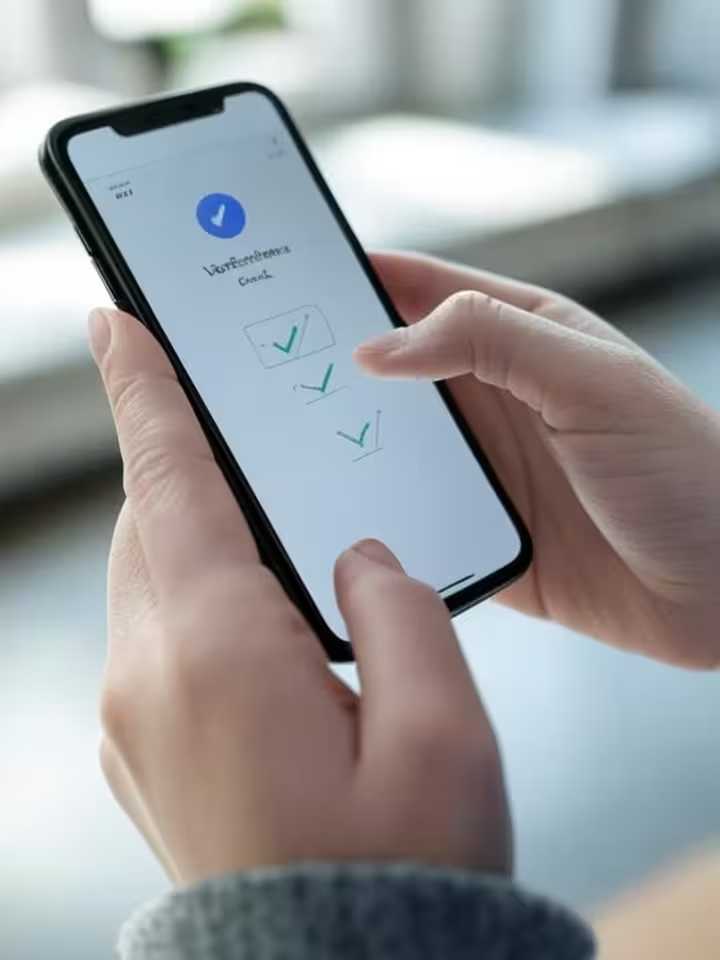
Sometimes you need more concrete verification, especially before intimacy or exclusivity. Here’s how to handle it without being offensive:
Frame it as mutual protection: “I want to make sure we’re both on the same page before we move forward. Could we do our first month’s allowance upfront? That helps me feel secure, and I think it’s fair for both of us.”
Offer verification in return: “I’m happy to verify myself too—we can exchange LinkedIn profiles, or I can show you my student ID / work badge / whatever makes sense.”
Suggest a smaller test: “Would you be comfortable with a PPM for our first few dates until we both feel confident in the arrangement?”
Real SDs get it. They understand that you need assurance. I’ve had multiple arrangements start with a SD voluntarily offering: “Let me send you the first month upfront so you know I’m serious.” That’s the energy you want.
Guys who get defensive, offended, or start guilt-tripping you (“Don’t you trust me?” “I thought this was about connection, not money”)—those are the guys wasting your time.
Red flags that mean walk away immediately
Some things aren’t worth verifying further. If you see these, just bounce:
He asks for money or gift cards from you. No legitimate SD ever needs financial help from a sugar baby. This is a scam 100% of the time.
He wants to move off the platform immediately to text/WhatsApp. While this eventually happens in real arrangements, pushing for it in the first message is usually a sign he’s been banned from the site before.
He sends you a check and asks you to send some back. Classic scam. The check will bounce after you’ve sent your money.
He claims his “accountant” or “assistant” will handle payments. Real wealthy men handle their own personal finances or use legitimate payment apps, not mysterious third parties.
His story keeps changing. First he’s divorced, then he’s separated, then actually he’s still married but “it’s complicated.” Inconsistency is always a red flag.
He pushes for intimacy before establishing financial terms. The arrangement discussion should happen before anything physical. Period.
I’ve walked away from seemingly promising situations because of these flags, and I’ve never regretted it. Not once. Trust your gut—if something feels off, it probably is.
Building ongoing trust in an arrangement
So you’ve verified him, started an arrangement, and things are going well. How do you maintain that trust long-term?
Consistency is everything. Does he show up when he says he will? Does he follow through on promises? Does the allowance arrive on time every month? These patterns tell you if you’ve got a quality SD.
Communication stays open. You should both feel comfortable discussing concerns. If something changes in his financial situation, a real SD will tell you directly, not ghost or make excuses.
Mutual respect deepens. Over time, you’ll likely learn more about each other’s real lives. He might introduce you to friends, share more about his business, include you in his world. That’s a sign of genuine connection.
My longest arrangement (almost three years with a private equity guy in NYC) worked because we established trust from day one and maintained it. He was consistent, generous, and respectful. I was reliable, engaging, and drama-free. We both invested in making it work.
On the flip side, I’ve had arrangements end when that trust broke down—usually because of dishonesty on his part (like failing to mention he was getting back with his ex-wife) or inconsistency (missing dates, late allowances, changing terms).
What about verifying yourself?
Look, this goes both ways. Quality SDs are verifying you too, and they should be.
Ways to make yourself more verifiable (and attractive to real SDs):
Use recent, accurate photos. No heavy filters, no misleading angles. Show up looking like your pictures.
Be honest about your situation. Student? Working professional? Between jobs? Whatever it is, own it. The right SD will appreciate your honesty.
Be consistent in your communication. If you say you’re available Thursday, be available Thursday. Flakiness is the fastest way to lose a quality SD.
Have a basic online presence. You don’t need to link your Instagram with 10K followers, but having a LinkedIn or a professional email goes a long way toward seeming legitimate.
I keep my profiles honest and straightforward—current photos, clear about being a graduate student (when I was), upfront about what I’m looking for. The right men appreciate that authenticity.
Trust your instincts (they’re usually right)
Here’s something I wish someone had told me earlier: your gut knows before your brain does.
If something feels off—even if you can’t articulate why—pay attention to that. Maybe his story is technically plausible but something about his energy is weird. Maybe everything checks out on paper but you just don’t trust him. Listen to that voice.
Dr. Gavin de Becker, who literally wrote the book on trusting intuition (“The Gift of Fear”), explains that our subconscious picks up on subtle inconsistencies and danger signals way before our conscious mind can process them. In sugar dating, this can be the difference between a great arrangement and a terrible experience.
I’ve ignored my instincts before—usually because I really wanted the arrangement to work or because I’d already invested time. It always backfired. Now? If my gut says no, it’s a no. There are too many genuine SDs out there to waste time on questionable ones.
Final real talk
Verification isn’t about being paranoid or treating every man like a criminal. It’s about being smart, protecting yourself, and ensuring you invest your time in arrangements that are actually real.
The guys who are worth your time? They’ll understand why you verify. They’ll cooperate, often even appreciate that you’re being careful (because it means you’re not naive or desperate). The guys who push back, get offended, or refuse basic verification? They’re showing you exactly who they are—believe them.
In eight years of sugar dating across multiple cities with dozens of arrangements, the men who made verification easy were always the best SDs. The ones who made it difficult were always problems.
So use these tricks. Reverse image search. LinkedIn stalk a little. Ask for that video call. Meet in public. Discuss finances clearly. And above all—trust your gut.
You deserve an arrangement with someone real, someone generous, someone who respects you enough to put in the effort to earn your trust. Don’t settle for less.
If you want more insights on spotting warning signs early or figuring out where quality men actually hang out, I’ve got you covered. This lifestyle can be absolutely amazing when you’re smart about it—and that starts with knowing who you’re dealing with.
Stay safe, stay smart, and go get that real arrangement you deserve.